What Makes Sourdough Different from Ordinary Bread?
Sourdough and ordinary bread may begin with similar ingredients, but the way they rise, develop flavour and transform during fermentation makes them very different.
Sourdough is often recognised by its crisp crust, chewy centre and slightly tangy flavour. However, the real difference between sourdough and ordinary bread begins long before the loaf reaches the oven.
Authentic sourdough is naturally leavened using a living starter made from flour and water. This starter contains communities of naturally occurring yeasts and lactic acid bacteria. Given enough time, these microorganisms ferment the dough, produce gases that help it rise and create the acids and flavour compounds that give sourdough its distinctive character.
Most ordinary bread, by comparison, is made to rise more quickly with commercial baker’s yeast. It can still be delicious and well made, but it does not undergo exactly the same fermentation process as naturally leavened sourdough.
Quick Answer
The main difference is the method of fermentation. Authentic sourdough uses a naturally active starter containing yeasts and lactic acid bacteria, while ordinary bread is usually leavened primarily with commercial baker’s yeast.
Sourdough fermentation generally develops more complex flavour, greater acidity, a distinctive texture and different keeping qualities. The nutritional and digestive effects can also differ, although they depend on the flour, recipe and fermentation method used.
Key Takeaways
- Authentic sourdough rises through a fermented starter rather than relying solely on commercial yeast.
- The starter contains both naturally occurring yeasts and lactic acid bacteria.
- Sourdough fermentation produces organic acids and a wider range of flavour compounds.
- Sourdough often has a crisp crust, chewy crumb and gently tangy flavour.
- It may stay enjoyable for longer because acidity can slow staling and discourage some spoilage organisms.
- Sourdough made with wheat is not gluten-free and is not suitable for people with coeliac disease.
- Not every loaf labelled “sourdough” is made using the same ingredients or fermentation process.
What Is Sourdough Bread?
Sourdough is bread made through the fermentation of flour and water using a sourdough starter. A starter is an active culture in which yeasts and lactic acid bacteria live together.
When the starter is mixed into fresh dough, the microorganisms begin feeding on carbohydrates in the flour. Yeasts produce carbon dioxide, which becomes trapped in the dough and helps it expand. Lactic acid bacteria produce acids and other compounds that influence flavour, aroma, texture and the behaviour of the dough.
This relationship between yeast, bacteria, flour, water, temperature and time is what gives each sourdough loaf its individual character. Different starters and baking environments can produce noticeably different results, even when the basic ingredients appear similar.
A scientific review of sourdough starters describes them as diverse, complex microbial cultures used in both artisan and commercial breadmaking around the world.
What Is Ordinary Bread?
“Ordinary bread” is a broad term, but it generally refers to bread made with flour, water, salt and commercial baker’s yeast. Recipes may also contain ingredients such as sugar, oil, butter, milk, improvers, preservatives or emulsifiers.
Commercial yeast is selected for its reliable and rapid gas production. It can make dough rise efficiently and predictably, which is useful for large-scale production and for recipes that need to be completed within a shorter period.
This does not mean that all yeast bread is poor quality. A skilled baker can produce excellent bread with commercial yeast. The difference is that naturally leavened sourdough involves a broader microbial community and a more acidic fermentation environment.
The most useful comparison is therefore not “good bread versus bad bread”. It is the difference between two methods of leavening and fermenting dough.
Sourdough vs Ordinary Bread: The Main Differences
| Feature | Authentic Sourdough | Ordinary Yeast Bread |
|---|---|---|
| Leavening | A fermented starter containing naturally occurring yeast and lactic acid bacteria | Usually commercial baker’s yeast |
| Fermentation | Often slower, allowing acidity and flavour compounds to develop | Often faster and designed for reliable, predictable rising |
| Flavour | Complex, aromatic and sometimes gently tangy | Usually milder and more neutral |
| Texture | Often chewy with an irregular, open crumb and substantial crust | Often softer with a finer, more uniform crumb |
| Acidity | Contains organic acids formed during fermentation | Usually less acidic |
| Keeping quality | Acidity may help slow staling and certain types of microbial spoilage | Varies according to the recipe, packaging and use of preservatives |
| Consistency | Naturally variable because the starter responds to flour, time and temperature | Usually more standardised and predictable |
| Production | Requires active starter care, close observation and careful timing | Usually faster and easier to standardise at scale |
How Does a Sourdough Starter Work?
A sourdough starter begins with flour and water. Flour naturally carries microorganisms, while the surrounding environment and ingredients also help shape the starter’s microbial community.
When the mixture is refreshed regularly with more flour and water, conditions develop that favour certain yeasts and lactic acid bacteria. These microorganisms form a stable working culture that can be used to leaven bread.
A healthy starter often becomes bubbly, expands after feeding and develops a pleasantly fermented aroma. These signs show that the microorganisms are active and producing gases and acids.
The starter is not simply homemade commercial yeast. It is an ecosystem. The yeasts and bacteria affect one another, and their balance changes according to factors such as:
- The type of flour used
- The amount of water in the starter
- Ambient temperature
- Feeding frequency
- Fermentation time
- The starter’s age and maintenance
These variables help explain why sourdough from two bakeries can taste different even when both bakers use flour, water and salt.
Why Does Fermentation Make Sourdough Different?
Fermentation is not simply a waiting period. It is an active process during which microorganisms and naturally occurring flour enzymes change the dough.
Gas Is Produced
Yeasts produce carbon dioxide. The dough’s gluten network traps some of this gas, allowing the loaf to expand.
Acids Develop
Lactic acid bacteria produce organic acids that influence flavour, dough strength, aroma and keeping quality.
Flavour Compounds Form
Fermentation creates a wide range of compounds that can give sourdough nutty, creamy, fruity, toasted or tangy notes.
The Dough Changes
Enzymes and microbial activity affect starches, proteins and other components of the flour before baking.
The final result depends on how these processes are managed. Sourdough is therefore as much about method as it is about ingredients.
Does Sourdough Taste Different from Ordinary Bread?
Yes. Sourdough commonly has a deeper and more complex flavour than quickly fermented bread. However, authentic sourdough does not necessarily have to taste sharply sour.
Its flavour can range from mild and creamy to noticeably tangy. The result is influenced by the starter, flour, hydration, fermentation temperature and the length of fermentation.
Sourdough may have notes that could be described as:
- Nutty
- Toasted
- Malty
- Creamy
- Fruity
- Earthy
- Gently acidic
A longer or cooler fermentation can produce a different balance of flavours from a warmer or shorter fermentation. The type of flour also matters. Wholemeal, rye and stoneground flours can contribute flavours and fermentation characteristics that differ from refined white flour.
Why is sourdough often chewier?
The combination of flour choice, hydration, dough development and fermentation can create a resilient, chewy crumb. Many artisan sourdough loaves also have larger and less uniform air pockets than standard sandwich bread.
Why is the crust thicker?
Artisan sourdough is often baked at a high temperature, frequently with steam during the early part of the bake. This helps the loaf expand before a crisp, deeply coloured crust develops.
The darker crust is not merely decorative. Browning reactions create many of the roasted flavours and aromas associated with freshly baked artisan bread.
Is Sourdough Healthier Than Ordinary Bread?
Sourdough can offer nutritional advantages in certain recipes, but it is not accurate to say that every sourdough loaf is automatically healthier than every ordinary loaf.
The nutritional value of any bread depends on several factors, including:
- The type and quality of flour
- Whether whole grains are used
- The amount of fibre
- The fermentation method and duration
- The salt, sugar and fat content
- The portion eaten
- The person’s overall diet and health needs
Scientific research suggests that sourdough fermentation can change the accessibility of certain nutrients, influence starch digestion and reduce some compounds such as phytate under suitable conditions. Phytate naturally occurs in grains and can bind to minerals.
However, systematic reviews have also stressed that laboratory findings do not always translate into significant clinical benefits for every person. Flour type, starter composition, fermentation and the comparison bread used in a study can all affect the outcome.
Does sourdough have a lower glycaemic response?
Some studies have found that sourdough bread, particularly certain wholegrain sourdoughs, may produce a lower rise in blood glucose than some comparison breads. Organic acids and changes to starch during fermentation may contribute to this effect.
Results are not identical across all breads or all people. Anyone managing diabetes or another medical condition should follow advice from a qualified healthcare professional rather than assuming that sourdough can be eaten without considering portion size and total carbohydrate content.
Is Sourdough Easier to Digest?
Some people report that they find traditionally fermented sourdough easier to eat than rapidly made bread. There are plausible reasons for this, as fermentation changes proteins, carbohydrates and other components of the flour.
Sourdough microorganisms may also reduce certain fermentable carbohydrates, sometimes referred to as FODMAPs, depending on the recipe and fermentation conditions. The extent of the reduction is highly variable and cannot be assumed from the word “sourdough” alone.
Digestive tolerance is personal. Someone may tolerate one type of sourdough better than another because of differences in flour, fermentation, portion size or individual sensitivity.
Is sourdough probiotic?
It is misleading to describe a baked sourdough loaf as a reliable source of live probiotics. The starter contains living microorganisms, but the high heat of baking kills most or all of them.
Fermentation can still leave behind acids and other microbial metabolites. Researchers sometimes investigate these as “postbiotic-like” components, but that is different from claiming that the finished loaf contains live probiotic cultures.
Does Sourdough Stay Fresh Longer?
Sourdough often retains enjoyable eating qualities for longer than a similar preservative-free, rapidly fermented loaf. Its acidity and fermentation by-products can help delay staling and inhibit the growth of some spoilage microorganisms.
This does not make sourdough immune to mould. Moisture, room temperature, humidity, handling and storage all affect how long a loaf lasts.
How should sourdough be stored?
Allow the loaf to cool completely before storing it. Keep it in a bread bag, bread box or clean cloth at room temperature for short-term use. Avoid sealing warm bread in plastic, as trapped condensation can make the crust soft and encourage spoilage.
For longer storage, slice the loaf and freeze it. Individual slices can be removed and toasted as needed.
How can you refresh day-old sourdough?
Toasting is the easiest option. To refresh a larger portion, lightly dampen the outside and warm it in the oven until the crust becomes crisp again. Take care not to soak the bread.
How Can You Tell Whether Sourdough Is Authentic?
There is no single visual test that proves how a loaf was made. An open crumb, rustic shape or flour-dusted crust can be reproduced in bread that has not undergone traditional sourdough fermentation.
The most reliable approach is to ask the bakery about its method. Helpful questions include:
- Is the loaf naturally leavened with a sourdough starter?
- Does the recipe contain commercial baker’s yeast?
- Is the dough fermented before baking?
- What ingredients are used?
- Is the bread baked fresh?
Does real sourdough contain only three ingredients?
A basic sourdough loaf can be made with flour, water and salt, with the starter itself made from flour and water. However, sourdough can also legitimately include seeds, herbs, cheese, olives, grains or other flavouring ingredients.
The presence of additional ingredients does not automatically make the bread inauthentic. The key question is whether a genuine sourdough culture and fermentation process are responsible for the bread’s character and rise.
Can baker’s yeast be added to sourdough?
Some bakeries add commercial yeast to a sourdough recipe to speed up or standardise production. This may still produce bread with sourdough flavour, but it is different from a loaf leavened entirely by an active starter.
Consumers looking for naturally leavened bread should ask whether commercial yeast is used rather than relying only on the product name.
Why does authentic sourdough cost more?
Authentic sourdough requires active starter care, careful dough handling, fermentation time, temperature management and skilled judgement. The baker must work with a living culture whose activity changes with the weather, flour and environment.
Small-batch artisan loaves also involve more hands-on work than highly automated, fast-production bread. The price reflects the time, ingredients, labour, expertise and limited production capacity involved.
Authentic Sourdough at Marley-Rose Coffee Co
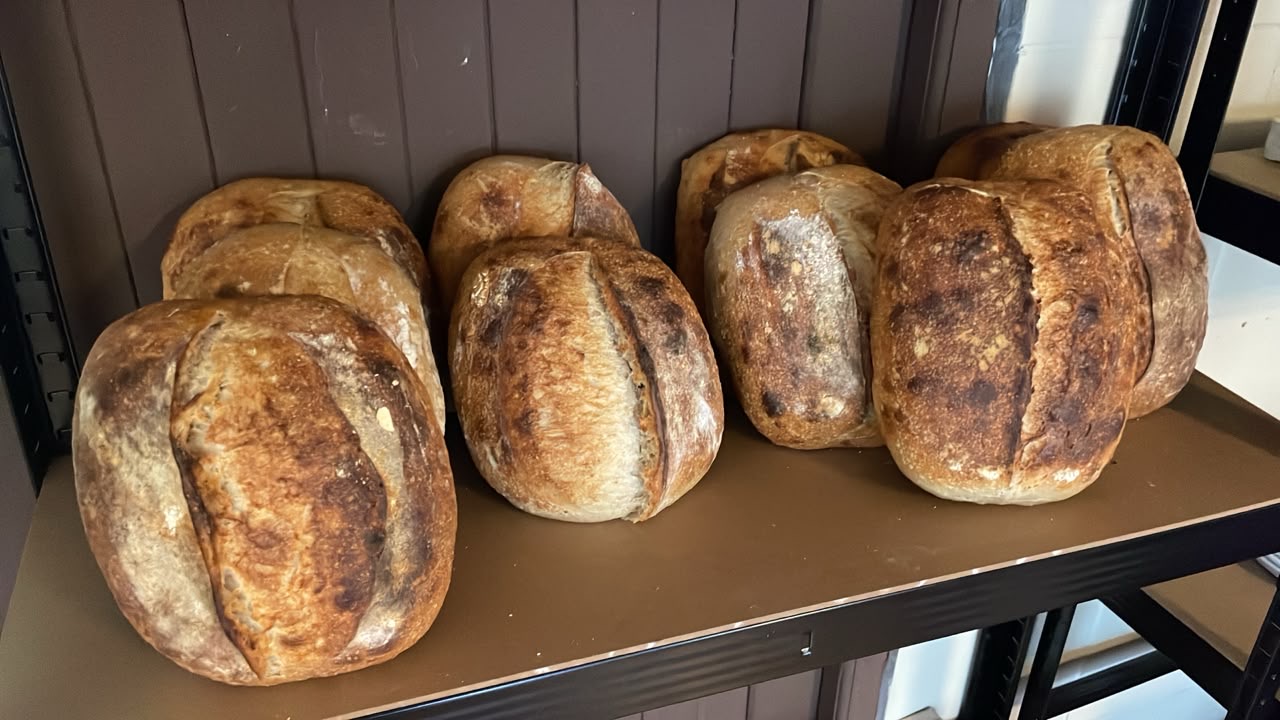
At Marley-Rose Coffee Co, our authentic sourdough loaves are baked with love daily by Ruan at our artisan bakery and coffee shop in Velddrif.
Our sourdough is naturally leavened without commercial yeast. Each loaf is carefully mixed, fermented, shaped and baked to develop a crisp crust, satisfying texture and naturally complex flavour.
Because sourdough is a living process, every batch requires close attention. Ruan works with the dough rather than forcing it into a rushed production schedule, allowing the starter, flour, temperature and fermentation to guide the final loaf.
Our loaves are prepared in small batches, so availability may be limited. Ordering in advance is recommended when you would like us to keep a loaf aside for you.
Order Authentic Sourdough
Contact Marley-Rose Coffee Co to order one of Ruan’s freshly baked authentic sourdough loaves. Our loaves are baked in small batches and may sell out, so advance orders are encouraged.
Contact Us to Order SourdoughFrequently Asked Questions
What is the biggest difference between sourdough and ordinary bread?
The biggest difference is the fermentation method. Authentic sourdough is leavened with a starter containing naturally occurring yeasts and lactic acid bacteria. Ordinary bread is usually leavened primarily with commercial baker’s yeast.
Is sourdough always sour?
No. Sourdough can be mild, creamy and gently aromatic rather than sharply sour. Its acidity depends on the starter, flour, temperature, hydration and fermentation method.
Does sourdough contain yeast?
Yes. A sourdough starter contains naturally occurring yeasts as well as lactic acid bacteria. Authentic naturally leavened sourdough does not need added commercial baker’s yeast.
Is sourdough gluten-free?
No. Sourdough made from wheat, rye or barley contains gluten. Traditional fermentation does not make wheat sourdough safe for people with coeliac disease.
Can people with gluten sensitivity eat sourdough?
Tolerance varies, and gluten sensitivity should not be self-diagnosed. Some people report that they tolerate traditionally fermented bread better, but wheat sourdough still contains gluten. Seek advice from a qualified healthcare professional if gluten causes symptoms.
Is sourdough healthier than white bread?
It depends on the complete recipe. Fermentation may change starch digestion and nutrient availability, but flour type remains important. Wholegrain bread will generally contain more fibre than bread made mainly with refined white flour, regardless of the leavening method.
Is sourdough lower in carbohydrates?
Not necessarily. Sourdough bread still contains carbohydrates from flour. Fermentation may change how some starches behave, but it does not make the loaf a low-carbohydrate food.
Does sourdough have a lower glycaemic index?
Some sourdough breads have produced a lower glycaemic response than certain comparison breads in scientific studies, but the result depends on the flour, formulation and fermentation. It should not be assumed that every sourdough loaf has a low glycaemic index.
Is sourdough a probiotic food?
The starter contains living microorganisms, but most or all are killed by the heat of baking. Finished sourdough should therefore not be treated as a reliable source of live probiotics.
Why does sourdough have holes?
Yeasts produce carbon dioxide during fermentation. This gas becomes trapped in the dough and forms air pockets. Hydration, flour strength, shaping and fermentation all influence the number and size of the holes.
Why is my sourdough difficult to slice?
A crisp crust and moist, chewy crumb can make a fresh loaf harder to slice. Allow it to cool fully and use a sharp serrated bread knife with a gentle sawing movement.
How long should sourdough cool before slicing?
Ideally, allow the loaf to cool completely. Cutting it while hot can release steam too quickly and leave the centre gummy or compressed. Cooling time varies according to the loaf’s size and flour.
Why does sourdough take longer to make?
Naturally occurring microorganisms generally work more slowly and less predictably than concentrated commercial yeast. The dough also needs time to develop acidity, flavour, structure and aroma.
Does sourdough last longer than normal bread?
It often stays enjoyable for longer than a similar preservative-free loaf because the acids produced during fermentation can slow staling and inhibit some spoilage organisms. Storage conditions remain important.
Can sourdough be frozen?
Yes. Allow it to cool completely, slice it and freeze it in a suitable airtight bag or container. Individual slices can be toasted directly from frozen or thawed as needed.
Can children eat sourdough?
Sourdough can form part of a child’s varied diet where there are no relevant allergies, intolerances or medical restrictions. Consider the loaf’s salt content and choose an age-appropriate serving.
Does authentic sourdough contain commercial yeast?
A naturally leavened sourdough does not require commercial yeast. Some products marketed as sourdough do contain added baker’s yeast, so ask the bakery or check the ingredient information when the distinction matters to you.
Where can I buy authentic sourdough in Velddrif?
Marley-Rose Coffee Co bakes authentic, naturally leavened sourdough daily in small batches at 16 Church Street, Velddrif. Contact us in advance to order a loaf and avoid missing out.
Sources and Further Reading
This article was informed by scientific reviews and recognised food information sources. Research into sourdough is ongoing, and results can vary according to the bread recipe, flour, starter, fermentation process and study design.
- Calvert MD, Madden AA, Nichols LM, et al. A review of sourdough starters: ecology, practices and sensory quality .
- Ribet L, Dessalles R, Lesens C, et al. Nutritional benefits of sourdoughs: a systematic review .
- D’Amico V, et al. Does sourdough bread provide clinically relevant health benefits?
- Alkay Z, Kök-Tas T. Exploring the nutritional impact of sourdough fermentation .
- Rolim PM, et al. Consumption of sourdough bread and changes in the glycaemic control of adults .
- Rizzello CG, et al. Sourdough fermented breads and digestibility .
- Menezes LAA, Minervini F, Filannino P, et al. Effects of sourdough on FODMAPs in bread .
- UK Government. Bread and flour labelling and composition guidance .
Our Editorial and Fact-Checking Process
Marley-Rose Coffee Co publishes practical articles to help readers understand artisan bread, sourdough, coffee and small-batch baking. Our content combines first-hand baking experience with information from reputable scientific, academic and official sources.
Before publication, articles are reviewed for accuracy, clarity and relevance. Health and nutrition claims are checked against peer-reviewed research or recognised public information sources. We avoid presenting early or limited research as settled fact and include important limitations where individual results may vary.
Our articles are reviewed periodically and may be updated when new evidence, food guidance or practical information becomes available. Content is provided for general information and does not replace personalised medical, nutritional or allergy advice from a qualified professional.
Last reviewed: August 2026